
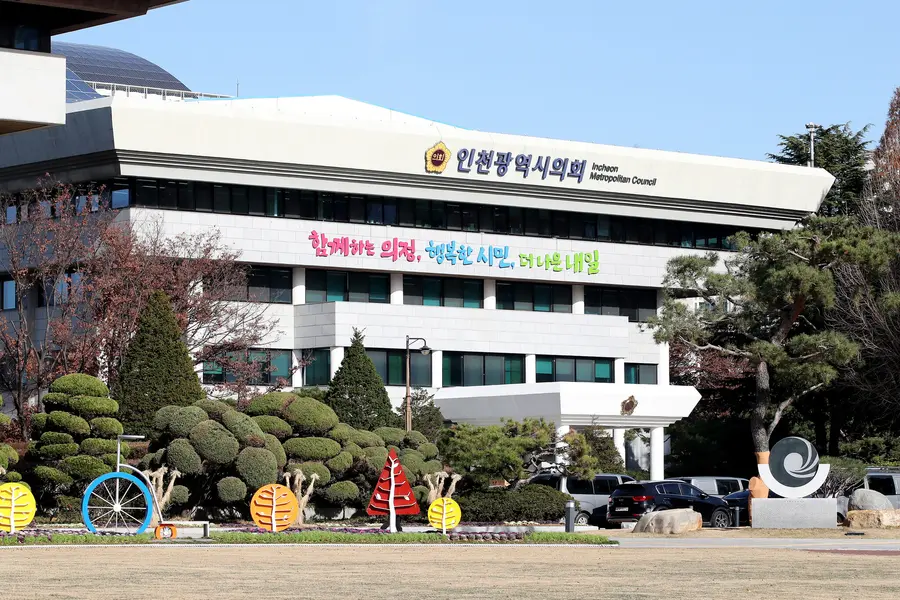
Ahead of the local elections in June, the question of whether the number of local council members will increase or decrease due to the reform of the Incheon administrative system has emerged as the biggest issue in the local political arena. It is uncertain how much practical representation can be secured by the Incheon reform, which focuses on the separation of districts, amidst the nationwide trend of administrative district integration, compounded by the crisis facing Ongjin County's electoral district due to a Constitutional Court ruling.
According to reports from the National Assembly, Incheon City, and local political circles on the 19th, Incheon City has conveyed to local members of the National Assembly that, considering the need for administrative demand commensurate with the city's status, it is inevitable to expand the number of metropolitan and basic council members as part of the administrative system reform that will increase the existing 10 districts to 11.
Currently, the number of metropolitan and basic council members in Incheon is 7 and 60 less than Busan, respectively, which has a similar city status. In particular, the population per Incheon city council member is about 74,000, significantly higher than the average of the 7 special and metropolitan cities excluding Seoul (about 59,000). This has led to ongoing concerns about the erosion of representative democracy and the equivalence of votes.
In light of these issues, the National Assembly's Special Committee on Political Reform (Jeonggae Special Committee) has proposed a significant increase in the number of Incheon city council members from the current 40 (36 district representatives and 4 proportional representatives) to 46. This aims to reflect the reality of the population exceeding 3 million and the administrative system reform scheduled for July 2026.
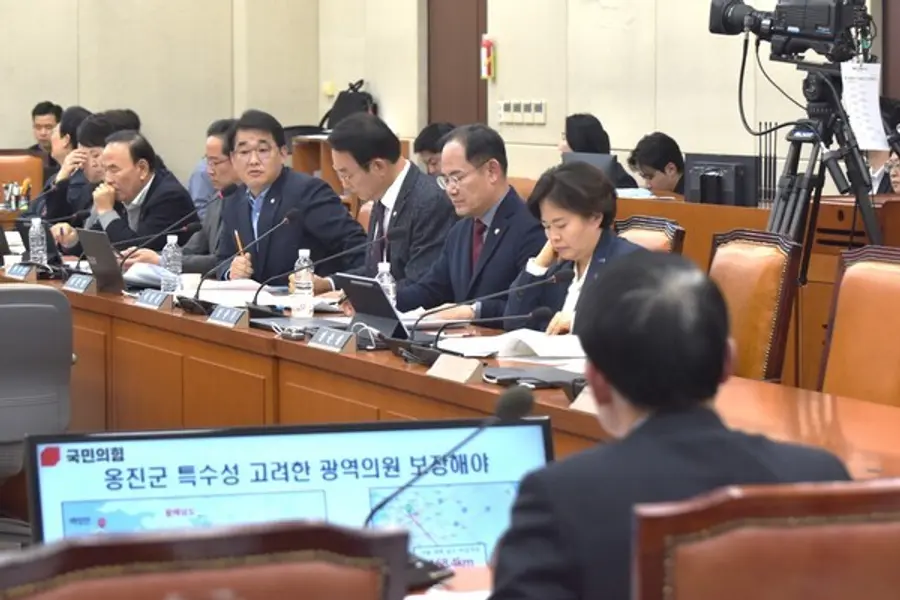
Among Incheon’s National Assembly members, Bae Jun-young of the People Power Party (Jung-gu, Ganghwa, Ongjin County) is the only member belonging to the Jeonggae Special Committee and is preparing a proposal for the maximum number of council members allowed by the Public Official Election Act. The key point is to recognise the new Jemulpo and Yeongjong districts, along with the existing Ganghwa County and Ongjin County, as independent units for calculating the number of council members.
The Public Official Election Act stipulates that the number of metropolitan council members is set at '2 for each National Assembly district', while also requiring that each autonomous district, city, or county has at least one member. By applying this, if a total of 17 calculation units are established by combining the four areas subject to administrative system reform with the existing National Assembly electoral districts, the basic number of council members would be 34. If the maximum adjustment range allowed by law, which is 20%, is applied, the number of district representatives could increase to 41.
If the number of district representatives is expanded to 41, the number of proportional representatives will also automatically increase. According to the regulation that allocates 10% of district representatives to proportional representatives, the number of proportional members will increase from the current 4 to 5. This would bring the total number of Incheon city council members to 46.
The background of the discussion on increasing the number of council members is the reality that the population per metropolitan council member in Incheon is excessively high compared to other metropolitan cities. As of December last year, Incheon’s population was 3,051,961, resulting in an average population of 84,777 per 36 metropolitan council seats. This shows a difference of several thousand to over 27,000 compared to Busan (77,181), Daegu (81,139), Daejeon (75,828), Gwangju (69,601), and Ulsan (57,471).
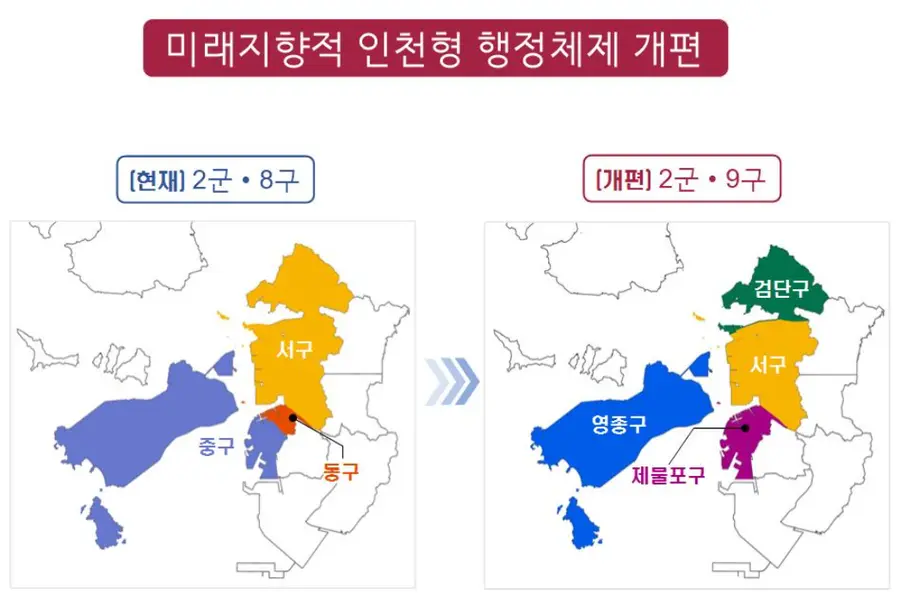
In particular, this local election will be held during a transitional period ahead of the establishment of Jemulpo, Yeongjong, and Geomdan districts. There are significant concerns that if the electoral districts and the number of seats are not adjusted to match the reformed administrative districts, the representation of residents in the newly established autonomous districts may weaken.
The issue of maintaining the Ongjin County electoral district is also an urgent task. After the Constitutional Court ruled that the population variance standard for electoral districts (±50%) was violated, Ongjin County, which has a small population, is being discussed as a potential target for consolidation. There are also concerns about the possibility of electoral district reform that would group Ongjin County with Jemulpo or Yeongjong districts, a so-called 'gerrymandering'.
In response, Representative Bae Jun-young argues that the uniqueness of Ongjin County, which is a population-declining area and a border and island region, should be recognised as an exception. Considering the extensive area and mobility conditions, he argues that maintaining an independent electoral district is necessary to ensure local representation.
Bae stated, "Now is the time for all Incheon National Assembly members, regardless of party affiliation, to come together to realise the number of local council members," and added, "In connection with the expansion of metropolitan council members, we will also discuss the issue of basic council members with the Ministry of the Interior and Safety and the National Election Commission."
The Jeonggae Special Committee held its first meeting on the 13th and has begun full discussions. The second meeting on the 26th is expected to reveal the outline of the adjustment of the number of metropolitan council members nationwide. As political power struggles surrounding the defence and increase of seats under the guise of administrative district integration intensify outside the capital region, attention is focused on whether Incheon can translate the administrative system reform into tangible results in terms of seats.
댓글 (0)
댓글 작성
댓글을 작성하려면 로그인이 필요합니다.
로그인하기