
The Ministry of the Interior and Safety has shifted the operation criteria for the Response Fund for Local Extinction to a 'people-centered' approach starting this year, prompting calls within the Incheon City Council for a more systematic overhaul of strategies to address population decline areas.
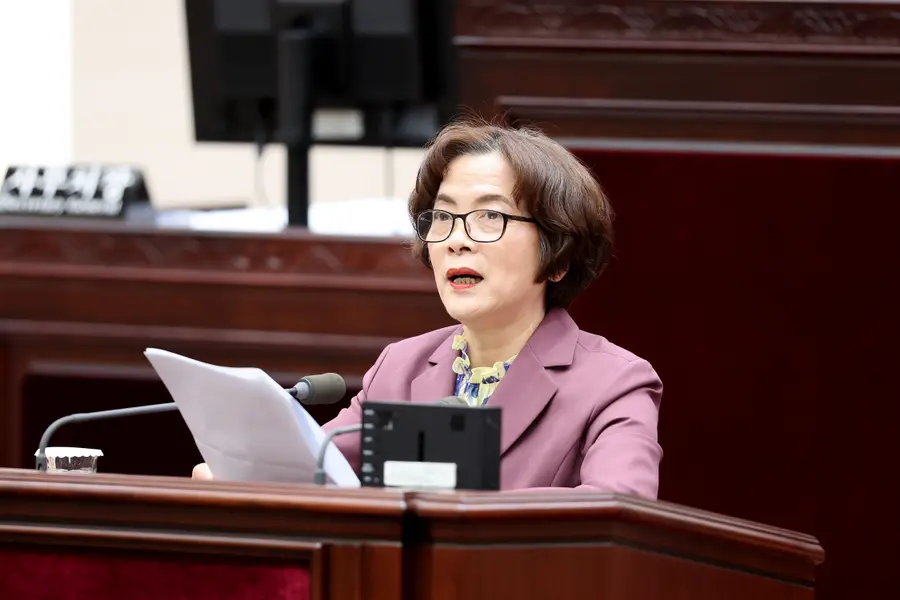
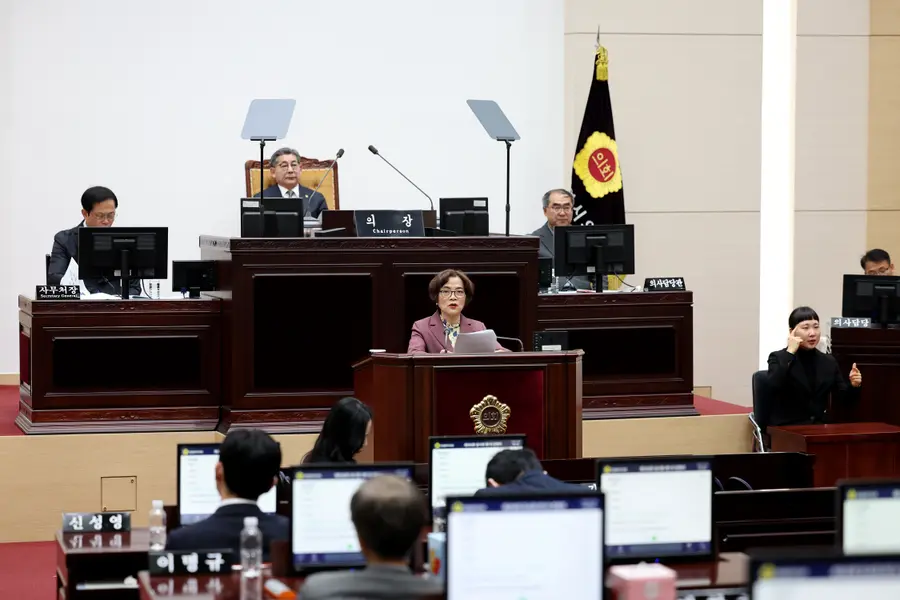
Shin Young-hee, a member of the Incheon City Council's Administrative Safety Committee (People Power Party, Ongjin County), stated during the 5-minute free speech at the first plenary meeting of the 306th Incheon City Council temporary session on the 27th, "The Response Fund for Local Extinction is no longer evaluated based on whether facilities are created, but rather on how convincingly the structure leading to population influx, retention, and settlement is designed."
According to the Ministry of the Interior and Safety, this year's Response Fund for Local Extinction will be distributed differentially, applying excellent, S, A, and B grades to 89 population decline areas. The excellent grade will receive 12 billion won, S grade 8.8 billion won, A grade 8 billion won, and B grade 7.2 billion won. The criteria for performance evaluation will be based on how well the potential for population change is demonstrated rather than a simple listing of projects.
Shin pointed out that Incheon's population decline areas are in competition on a national level within this evaluation system. He explained, "While Ganghwa County received a relatively positive evaluation with a plan reflecting the concepts of residential population and stay, Ongjin County, due to its structural characteristics as an island region and low financial independence, has no choice but to prioritize securing basic living infrastructure such as housing, transportation, and medical care."
Population indicators also reflect this gap. As of the end of last year, Incheon's registered population exceeded 3.05 million, an increase of over 30,000 compared to the previous year, marking the highest growth rate among metropolitan governments nationwide. In contrast, Ongjin County's population is about 19,000, which has decreased by approximately 1.8% compared to the previous year, continuing a three-year decline.
Shin stated, "While Incheon's overall population is increasing, it is difficult to see that this growth trend is spreading to the island regions," and pointed out that "areas experiencing structural population decline cannot be addressed solely through responses at the basic local government level."
He further highlighted the gap between policy and practice by citing the rural and fishing village study support ordinance he established. Shin emphasized, "While the system is in place, the lack of adequate living conditions and spaces for families to stay has prevented actual population influx," and added, "People-centered policies can only be effective when housing, education, healthcare, and jobs are designed together."
In response, Shin proposed strengthening Incheon's role as a solution. He stated, "Currently, the Response Fund for Local Extinction has a structure where counties and districts establish plans, and Incheon City compiles them. To respond to an evaluation system that demands people-centered outcomes, Incheon City must shift to a model where it designs strategies in collaboration with population decline areas from the planning stage."
Specifically, he suggested: ▲ strengthening the dedicated task force (TF) function for the Response Fund for Local Extinction ▲ developing customized settlement models reflecting the characteristics of island regions ▲ establishing a mid- to long-term roadmap for population influx.
Shin concluded, "The Response Fund for Local Extinction is not a short-term budget execution but a policy tool for designing the future of the region," and urged that "Ongjin County should be recognized as an important part of Incheon's population strategy, rather than as a peripheral area, and Incheon City should take a more proactive role."
댓글 (0)
댓글 작성
댓글을 작성하려면 로그인이 필요합니다.
로그인하기