
As high-rise buildings rapidly increase in the Incheon area, it has been pointed out in the Incheon City Council that a response system to protect citizens' lives and safety in the event of a fire requires the final link of 'citizen participation'.
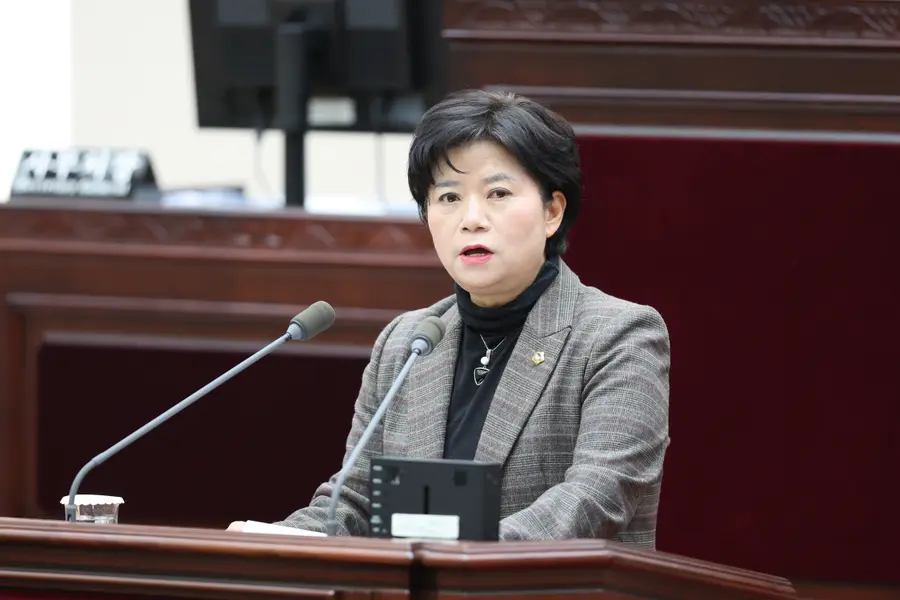
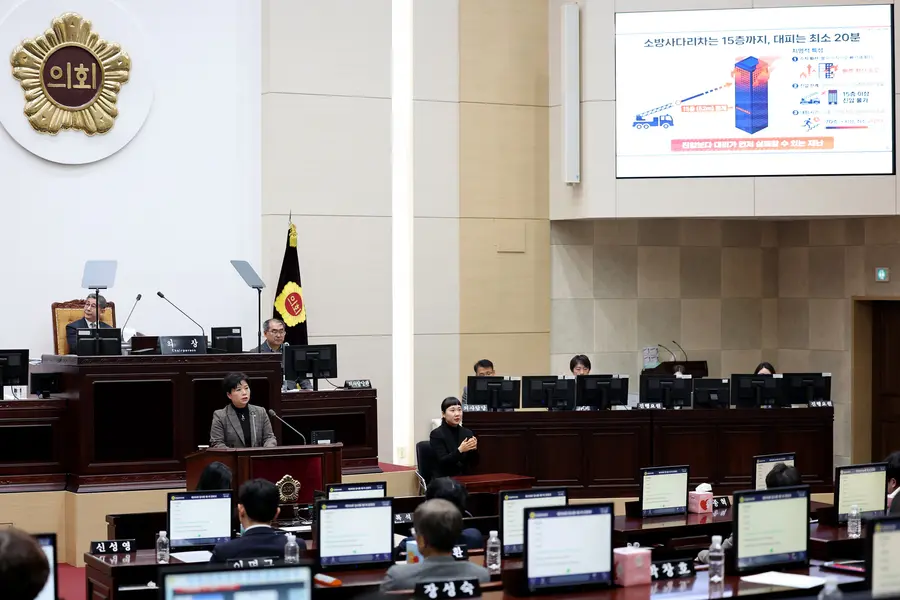
Yoo Seung-bun, a member of the Incheon City Council's Administrative Safety Committee (People Power Party, Yeonsu-gu 3), stated during the 5-minute free speech at the first plenary meeting of the 306th Incheon City Council extraordinary session on the 27th, "High-rise buildings are no longer just symbolic facilities but spaces where many citizens live their daily lives," and added, "The fire response system must also be checked and supplemented in line with these changes."
According to Yoo, there are currently 14 high-rise building complexes in Incheon, comprising a total of 24 buildings. More than half of these are concentrated in Yeonsu-gu, including buildings that reach up to 70 floors. The Sharp American Town in Songdo is 70 floors, and the Posco Tower Songdo is 68 floors, representing Incheon's high-rise buildings.
High-rise fires are structurally different from ordinary fires. Flames spread rapidly in a vertical direction, and due to the physical limitations of fire ladders, direct suppression of the upper floors is difficult. It takes at least 20 minutes to evacuate from the 70th floor to the ground, making it a type of disaster where evacuation failure can occur before suppression.
The Incheon Fire Department and Incheon City have consistently strengthened their response in terms of systems and equipment. In 2023, they established a fire response manual for high-rise buildings and have been enhancing on-site response capabilities through multi-stage water supply training, local adaptation training, and comprehensive emergency response training. Incheon City is also managing the operation of the comprehensive disaster prevention room and the installation of evacuation safety zones through pre-disaster impact assessments and regular inspections.
However, Yoo pointed out that "while the system and training framework have been established to a certain extent, how citizens can act in real situations remains weak." Many residents do not accurately know the locations and routes of the evacuation safety zones installed in high-rise buildings, and there are limitations in participation and perception regarding evacuation training.
Yoo also mentioned overseas cases. The 2017 Grenfell Tower fire in the UK and the recent high-rise fire in Hong Kong have been analysed as cases where inadequate safety management during construction and a lack of awareness among residents exacerbated the damage. He stated, "As Incheon is likely to see an increase in the maintenance and remodelling of high-rise buildings in the future, it is essential to check from the building management stage to citizen awareness together."
Accordingly, Yoo proposed the following to supplement the high-rise fire response system: ▲ Establishing a system to integrate and manage the risk factors and evacuation routes of high-rise buildings ▲ Regularising resident participation evacuation training that actually moves to the evacuation safety zones ▲ The need for continuous guidance and promotion regarding evacuation procedures and the functions of evacuation safety zones.
Yoo emphasised, "No matter how excellent the fire equipment and manuals are, if citizens do not know the evacuation routes and do not participate in training, it is merely safety on paper," and added, "Preparation before an accident saves lives more than response after an accident."
댓글 (0)
댓글 작성
댓글을 작성하려면 로그인이 필요합니다.
로그인하기